

A shirt may look perfectly acceptable after sewing, but when the wearer moves, sits or stretches, the fabric yarns beside the seam can shift apart. The stitching may remain intact while a visible opening develops along the seam. This problem is known as seam slippage.
Seam slippage is especially important for woven fabrics used in shirts, trousers, jackets, uniforms and upholstery. A laboratory test helps determine how well the fabric structure resists yarn movement around a sewn seam.

What Is Seam Slippage?
Seam slippage is the movement of warp yarns over weft yarns, or weft yarns over warp yarns, near a sewn seam when a pulling force is applied. The movement creates a gap or opening alongside the stitch line.
It is a property of the fabric structure and should not be confused with sewing thread breakage or seam rupture.
Seam Slippage vs Seam Strength
These two terms are related but describe different behaviours.
| Parameter | What happens | Typical concern |
|---|---|---|
| Seam slippage | Fabric yarns move beside the stitch line. | Visible opening or loss of seam appearance. |
| Seam strength | The sewn seam is loaded until a specified failure or breaking force is reached. | Seam or fabric may rupture under load. |
| Stitch failure | Sewing thread or stitch formation fails. | Seam may open because of broken or damaged stitches. |
A seam can show yarn displacement without the sewing thread breaking. It is also possible for a seam to fail because of weak stitching rather than fabric slippage. The laboratory report should identify the observed failure mode.
Why Does Seam Slippage Occur?
- Low yarn density: Wider spacing between warp or weft yarns can make displacement easier.
- Low fabric cover: A loose construction may provide less resistance to yarn movement.
- Yarn characteristics: Yarn surface, construction and mobility influence the behaviour of the fabric structure.
- Fabric finish: Finishing and lubrication can affect friction between yarns.
- Seam engineering: Seam type, stitch density, needle size and sewing tension can influence the appearance and performance of the sewn area.
ISO 13936 Test Methods
The ISO 13936 series addresses the slippage resistance of yarns at a seam in woven fabrics.
| Standard | Method | Purpose |
|---|---|---|
| ISO 13936-1 | Fixed seam opening method | Determines the force associated with a specified seam opening. |
| ISO 13936-2 | Fixed load method | Determines seam opening under a specified load. |
| ISO 13936-3 | Needle clamp method | Evaluates yarn slippage at a seam using a specified clamping arrangement. |
ISO 13936-2:2004 is intended for woven apparel and upholstery fabrics, including stretch fabrics containing elastomeric yarns. Confirm the applicable part and current buyer requirement before testing.
How the Fixed Load Test Works
In the fixed load method, a stitched specimen is prepared and mounted in a tensile testing machine. The specimen is pulled under a specified force, and the opening between displaced yarns around the seam is evaluated.
Basic test workflow
- Confirm the required standard, load, specimen dimensions and acceptance criteria.
- Prepare representative woven fabric specimens in the required directions.
- Sew the specimens using the specified seam construction and sewing conditions.
- Condition the specimens according to the applicable test procedure.
- Mount the specimen in the tensile testing machine with the seam positioned correctly.
- Apply the specified force using the required machine settings.
- Measure the seam opening or record the required result according to the selected method.
- Report the direction, force, measured opening and observed failure behaviour.
Worked Example: Understanding Seam Opening
Assume a buyer specification requires the seam opening to be no more than 6 mm under a stated test load. This is an illustrative requirement only; it is not a universal ISO acceptance limit.
| Specimen | Measured opening | Illustrative result |
|---|---|---|
| A | 4.2 mm | Within the stated 6 mm limit |
| B | 5.8 mm | Within the stated 6 mm limit |
| C | 6.7 mm | Above the stated 6 mm limit |
In this example, specimen C exceeds the assumed buyer limit. The laboratory should report the actual measurement and the agreed acceptance rule rather than simply writing “failed” without context.
How to Reduce Seam Slippage in Production
- Review fabric construction and yarn density during material approval.
- Test both relevant fabric directions where required by the specification.
- Use a suitable seam construction for the fabric and garment end use.
- Review stitch type, stitch density, needle size and thread tension.
- Check seam allowance and sewing consistency.
- Investigate fabric lots that show repeated yarn displacement.
- Run production trials before bulk cutting when the risk is significant.
Common Mistakes During Seam Slippage Testing
| Mistake | Why it matters | Corrective action |
|---|---|---|
| Using an incorrect seam assembly | Changes the interaction between fabric and stitching. | Follow the selected standard and buyer specification. |
| Mixing warp and weft results | Fabric may behave differently in each direction. | Identify and report the tested direction. |
| Ignoring sewing quality | Poor stitching can distort the result. | Use competent operators and controlled sewing settings. |
| Confusing seam strength with slippage | The failure mechanisms are different. | Record the actual failure mode and method. |
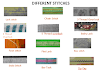
To understand how stitch construction affects a sewn seam, see the Textile Mates guide to different types and classification of stitches. The article on different types of fabric defects is also useful when investigating fabric-related quality problems.
Frequently Asked Questions
1. What is seam slippage in woven fabric?
It is the movement of warp or weft yarns beside a sewn seam, which creates an opening along the seam line.
2. Which standard is used for seam slippage testing?
The ISO 13936 series is used for evaluating yarn slippage at seams in woven fabrics. The selected part depends on the required test method.
3. What is the difference between ISO 13936-1 and ISO 13936-2?
Part 1 uses a fixed seam opening approach, while Part 2 uses a fixed load approach.
4. Is seam slippage the same as seam strength?
No. Seam slippage concerns yarn displacement beside the seam; seam strength concerns the force and failure behaviour of the sewn seam.
5. Can knitted fabrics be tested using ISO 13936-2?
The method is intended for woven fabrics, including specified stretch woven fabrics. It should not be assumed to apply to all knitted constructions.
6. Does higher thread tension solve seam slippage?
Not necessarily. Excessive tension may create other defects. Fabric construction, stitch type and sewing settings should be reviewed together.
7. What does a 6 mm seam opening limit mean?
It may be a buyer-specific acceptance requirement under a defined test condition. It is not a universal limit for every fabric or garment.
Conclusion
Seam slippage is a fabric-related quality risk that can affect garment appearance and seam integrity. Correct testing requires the right standard, controlled seam preparation and clear reporting of the test direction, load and opening. By checking fabric construction and sewing conditions together, manufacturers can reduce the risk before bulk production.



0 Comments