

4-Point Fabric Inspection System: Rules, Formula & Calculator
Fabric quality inspection is an important step before bulk cutting. A fabric roll may look acceptable from a distance, but closer inspection can reveal slubs, holes, stains, broken yarns, missing picks, needle lines and other defects.

The 4-Point System is widely used to assign penalty points to visible fabric defects. Instead of comparing only the number of defects, the method considers their size and calculates a normalized score for the inspected fabric area.
This guide explains the common four-point scoring bands, the calculation formula and how to use the online fabric inspection calculator.
What Is the 4-Point Fabric Inspection System?
The 4-Point System is a visual fabric grading method. Inspectors assign penalty points to defects based on their measured length. The total points are then compared with the inspected fabric area to calculate a score, commonly expressed as points per 100 square yards.
The method is associated with ASTM D5430, Standard Test Methods for Visually Inspecting and Grading Fabrics. The applicable edition and buyer-approved point assignment option should always be checked before an inspection is performed.
4-Point Defect Scoring Table
| Defect Length | Metric Approximation | Penalty Points |
|---|---|---|
| Up to 3 inches | Up to 7.5 cm | 1 |
| Over 3 up to 6 inches | Over 7.5 up to 15 cm | 2 |
| Over 6 up to 9 inches | Over 15 up to 22.9 cm | 3 |
| Over 9 inches | Over 22.9 cm | 4 |
Measure the defect according to the inspection procedure and use the applicable point assignment option. The longest dimension is commonly used for the basic length-based scoring bands.
How to Calculate Total Defect Points
For example, an inspector records:
- 10 defects in the 1-point category.
- 5 defects in the 2-point category.
- 2 defects in the 3-point category.
- 1 defect in the 4-point category.
Total points = 10 + 10 + 6 + 4 = 30 penalty points.
4-Point System Formula
When roll length is measured in yards and cuttable width in inches:
When using metric measurements:
Points per 100 sq yd = (Total Penalty Points × 8,361.27) ÷ (Length in metres × Width in centimetres)
Use cuttable fabric width where required by the buyer's inspection procedure. Make sure length and width units match the selected formula.
Worked Example of Fabric Inspection
Suppose the inspected roll has the following details:
- Roll length = 100 metres.
- Cuttable width = 180 centimetres.
- Total penalty points = 30.
Inspected area = 100 × 180 ÷ 100 = 180 square metres.
Points per 100 sq m = 30 × 10,000 ÷ (100 × 180) = 16.67 points.
Points per 100 sq yd = 30 × 8,361.27 ÷ (100 × 180) = 13.94 points.
Online 4-Point Fabric Inspection Calculator
Enter the inspected roll dimensions, defect counts and the acceptance limit agreed with your buyer. The calculator estimates normalized points per 100 square yards and per 100 square metres.
4-Point Fabric Inspection Calculator
The default 20-point limit is an example only. Replace it with the actual buyer-approved limit for your order.
How to Inspect Fabric Rolls More Consistently
- Check the buyer's approved inspection standard and acceptance criteria.
- Confirm the fabric roll number, style, colour and batch details.
- Verify the roll length and cuttable width.
- Use suitable inspection equipment and lighting.
- Measure and classify defects consistently.
- Record the defect position and point assignment.
- Calculate the normalized score for the inspected area.
- Review any separate buyer requirements for holes, running defects, shade and fabric width.
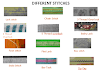
Common Fabric Defects Found During Inspection
- Slub and thick yarn.
- Missing yarn or missing pick.
- Broken end and broken pick.
- Oil stain and other visible stains.
- Hole or opening.
- Needle line and needle damage.
- Barré and shade variation.
- Crease mark and finishing mark.
- Drop stitch in knitted fabric.
Important Limitations of the Calculator
This calculator totals the entered defect points and normalizes them by the inspected area. It does not record the exact location of every defect and therefore does not verify a separate per-linear-yard cap, continuous-defect rejection rule, edge exclusion or every alternative ASTM scoring option.
For official shipment acceptance, use the applicable ASTM D5430-26 method or the edition named in the buyer's specification, along with the approved inspection procedure. The calculator is a planning aid, not a replacement for a documented fabric inspection.
Frequently Asked Questions
1. What is the 4-Point System in fabric inspection?
It is a visual fabric grading method that assigns penalty points to defects according to their measured size.
2. What is ASTM D5430?
ASTM D5430 is a standard covering test methods for visually inspecting and grading fabrics.
3. How many points are assigned to a defect up to 3 inches?
Under the common length-based four-point scale, a defect up to 3 inches receives 1 point.
4. How many points are assigned to a 5-inch defect?
A defect over 3 inches and up to 6 inches receives 2 points under the common length-based scale.
5. How many points are assigned to a defect over 9 inches?
The common length-based scale assigns 4 points to a defect over 9 inches.
6. What is the formula for points per 100 square yards?
Multiply total penalty points by 3,600 and divide by roll length in yards multiplied by width in inches.
7. Can I use metres and centimetres?
Yes. Use the metric formula for points per 100 square metres or the metric-input conversion formula for points per 100 square yards.
8. What is the difference between linear-yard and square-yard grading?
Linear-yard grading does not normalize for width in the same way. Square-yard grading accounts for inspected area and width.
9. Is 20 points per 100 square yards always acceptable?
No. Acceptance limits must come from the buyer's specification or the agreed inspection procedure.
10. Are holes always counted as 4 points?
Hole scoring can depend on the applicable standard option or buyer manual. Follow the agreed requirement rather than assuming a universal rule.
11. Can knitted fabric be inspected using a four-point method?
The applicable visual inspection and grading method should be selected according to the fabric and buyer specification. Check the relevant ASTM procedure and contract.
12. What is a running defect?
It is a fault that continues along the fabric, such as a long needle line or continuous streak. Buyers may have separate rules for such defects.
13. Why should cuttable width be used?
It provides the width basis required by the applicable inspection procedure and helps avoid incorrect area calculations.
14. Can a roll pass the overall score but still be rejected?
Yes. Separate buyer rules for concentrated defects, holes, running defects, shade or other quality parameters may still cause rejection.
15. Does this calculator replace official fabric inspection?
No. It calculates an entered defect-point total and area score. The actual inspection must follow the agreed standard and buyer requirements.
Conclusion
The 4-Point System helps textile and garment quality teams evaluate visible fabric defects using a structured scoring approach. Correct measurement, consistent point assignment and accurate roll dimensions are essential for a useful inspection result.
Always use the buyer-approved inspection method and acceptance limit. A calculated score is only one part of fabric quality approval.
References
ASTM International – D5430: Standard Test Methods for Visually Inspecting and Grading Fabrics



0 Comments